HEULE_MAPAL_Kurbelwelle_lowres
Customer Story

HEULE and MAPAL optimise crankshaft machining

In the automated series production of crankshafts, every second counts. The demands are high: maximum process reliability, the highest precision and efficient manufacturing. MAPAL and HEULE have jointly developed a solution for the central relief bore that meets these requirements: a combination tool that enables drilling and deburring on both sides in a single operation.
HEULE_MAPAL_Kurbelwelle_lowres

Weight plays a decisive role in crankshafts in service. The use of heavy materials such as steel or cast iron has a direct impact on the total weight of the crankshaft and thus on the moving mass within the engine. This affects fuel consumption and compliance with applicable CO2 regulations. 

For this reason, many engine manufacturers are striving to reduce weight. A commonly used measure is the removal of unnecessary material by machining a central “lightening” bore, which extends along the entire length of the crankshaft.


Due to the shape of the crankshaft, the tool repeatedly enters and exits the material during this boring operation. To machine the entire crankshaft in a single pass, tools with lengths of up to 800 mm are required. Furthermore, due to its geometry, the component presents restricted access to the bore edges, which makes the subsequent deburring a major challenge.

Automated tooling solution sought for the relief bore

A customer from the automotive industry was looking for an ideal solution for drilling and deburring the relief bore in the crankshaft, which is made from custom steel with two hardness grades. The task was to machine two different crankshaft types with bore diameters of 18 mm and 22 mm. Not only was a precise bore required, but also deburring of the numerous front and back bore edges. 


A reliable solution was needed that would function in automated production environments. Previously, drilling and double-sided deburring required two separate process steps using different tools. As the tool magazine was fully occupied, the tool change between the drill and the deburring tool had to be carried out manually. This resulted in extended cycle times and a high set-up effort.


The customer was therefore specifically looking for a solution that would combine drilling and double-sided deburring in a single operation and could be seamlessly integrated into the existing drilling process without requiring additional tool stations or necessitating major investment in further machinery.

Two specialists, one goal: efficiency and precision in crankshaft production

The two specialists, MAPAL and HEULE, recognised the customer’s challenges and worked together to develop a specific application solution. MAPAL is a global leader in the development of precision tools and machining concepts for the machining of complex components. HEULE is a long-established Swiss company that has for decades been synonymous with innovative and reliable tooling solutions for deburring, chamfering and backspotfacing bores – wherever the highest quality and Swiss precision are required.


HEULE and MAPAL combined their core expertise in drilling and deburring to develop a solution that meets the high demands of crankshaft production. Through open communication, close collaboration and precise coordination – both in the companies’ own test centres and directly at the customer’s site – a tailor-made combined solution was created. It was essential to maintain transparent manufacturing process steps at all times: changes to the deburring process have a direct impact on the drilling process, and vice versa. Only through this holistic approach could process reliability, drilling and deburring quality, and tool life be optimally coordinated.

Design and integration of the solution

The result is a combined solution that enables end-to-end machining of the relief bore – incorporating both drilling and deburring in a single operation – and can be integrated directly into the existing process. The combined tool is based on a MAPAL indexable-head drill with a TTS interface and an integrated SNAP18 deburring module from HEULE.

MAPAL_HEULE_Kombilösung_lowres

The solution enables rapid drill head changes within the machine. Once the tool life has been reached, only the drill head is replaced, thereby reducing set-up times and tooling costs. Furthermore, different geometries and coatings can be flexibly adapted to different materials without changing the base holder. The CFS interface fitted to the back of the indexable head holder enables the tool system to be extended in a modular fashion and adapted flexibly to different drilling depths with high stability and process reliability – a significant advantage when machining long components such as crankshafts.

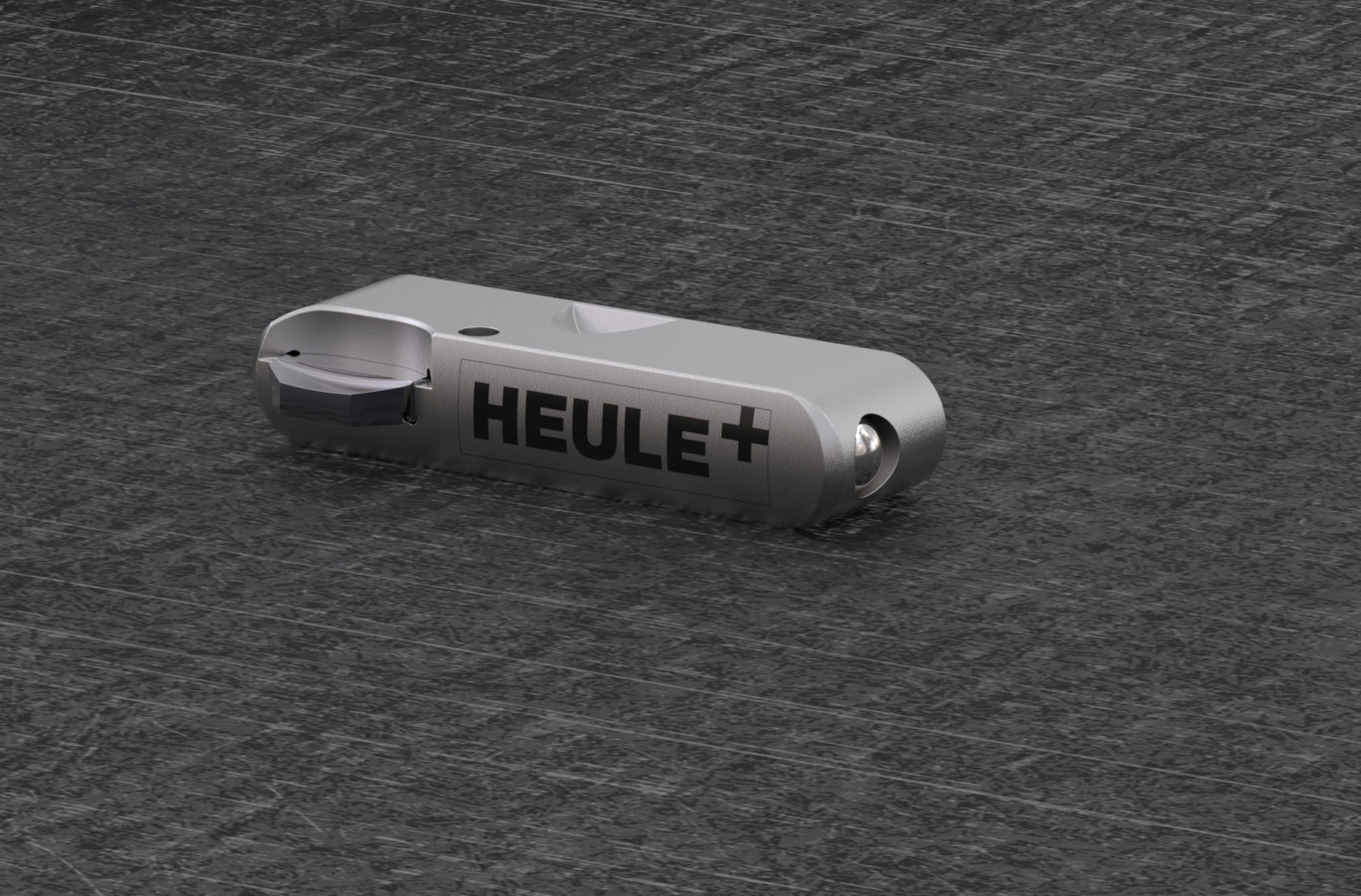
HEULE_SNAP Modul

The SNAP18 module is a miniaturised deburring system measuring just 16.0 x 3.5 x 5.0 mm, which is integrated into the TTS indexable head holder. It is fitted directly behind the indexable drilling head and is quick to set up and easy to maintain – a clear advantage in automated manufacturing environments. 

During the drilling operation, the module enables simultaneous forward and reverse deburring. The cutter produces the desired 1 mm chamfer at the working feed rate. As soon as the defined chamfer depth is reached, the cutter retracts radially into the base body. Upon exiting the drill hole, the cutter is returned to its starting position via the spring-loaded control pin so that the chamfer on the reverse side can be cut.

«We are convinced by this innovative solution featuring MAPAL’s interchangeable head system and HEULE’s integrated chamfering module. The machining process is significantly simplified, and the tedious tool changes in the magazine, as well as time-consuming deburring processes, are now a thing of the past. With this solution, the customer has not only been able to eliminate one work step but also significantly reduce their cycle times.»
Johannes Geiss
Component Manager Internal Combustion Engine, MAPAL

Versatile applications and economic benefits

The combined solution is suitable for a wide variety of materials and applications with bore diameters of 18 mm and above and is not limited to crankshafts. It is particularly for components with complex geometries or large dimensions – such as housings, bearing rings or flanges – it enables simultaneous drilling and double-sided deburring, even in hard-to-reach areas. Furthermore, the solution is suitable for workpieces with a large number of bores, such as filter elements, connecting parts or in steel construction. This means that the bores can be completed in a single operation, which significantly reduces process times.


The combination of MAPAL’s drilling technology and HEULE’s SNAP18 module takes crankshaft machining to a new level of efficiency. This reliable combination tool combines drilling and double-sided deburring in a single operation. The results achieved are precise and of the highest quality. Cycle times are significantly reduced, a long tool life is ensured, process reliability is enhanced and efficiency is sustainably increased. Furthermore, the combination solution eliminates the need for additional tools. This not only saves space in the tool magazine but also significantly reduces investment and operating costs through integration into the existing machining centre. 


The design as an interchangeable head system significantly optimises tooling costs by limiting the use of costly solid carbide inserts to the interchangeable drill heads. Overall, the solution offers clear added value for anyone seeking maximum quality with minimum cycle times and optimised cost structures.