Back to deburring

COFA

Front and back deburring of even and uneven bores in one single pass

  • No need to rotate the workpiece or stop the spindle
  • Radius-formed deburring profile
  • Standard range starting from bore diameter 2.0 mm
  • Cassette solutions from bore diameter 10.0 mm 
COFA | Catalogue
pdf ・ 3,3 MB
Tool Selector
COFA range for automatic deburring of bore edges in a single pass

Range

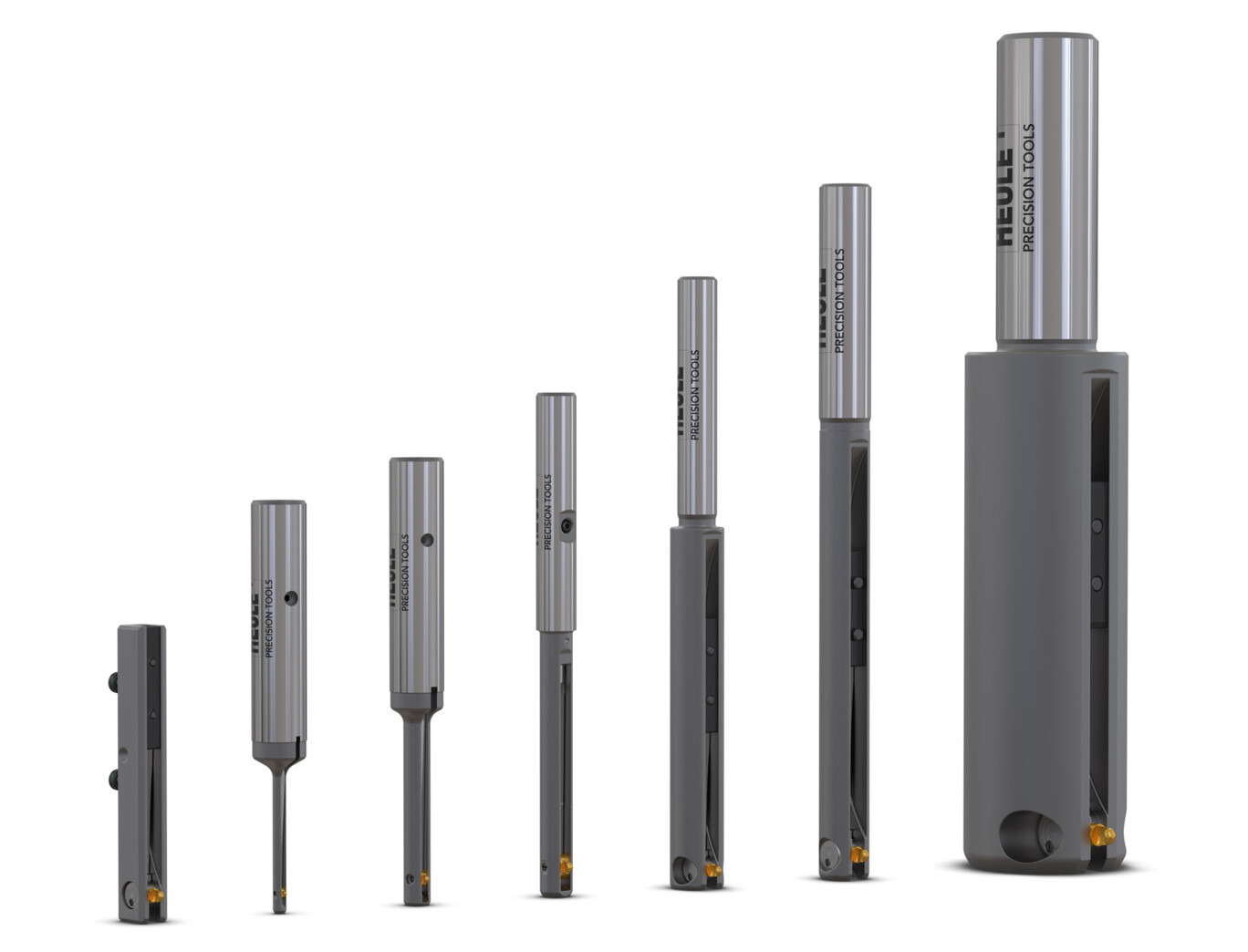
The range includes deburring tools for use on bore diameters from 2.0 mm to 26.0 mm. Any size bore diameter can be deburred using cassettes. The deburr size ranges from 0.1 mm to a maximum of 1.4 mm radially, depending on bore dimension and blade selection. The blades are available for both forward and backward cutting, as well as backward cutting only. The COFA operates reliably in both CNC and manual operations. The COFA is used for deburring bores in metal or other materials.

BoreMax. Deburring sizeTool series
2.0 – 3.1 mm 0.10 mmC2
3.0 – 4.1 mm 0.15 mmC3
4.0 – 5.0 mm 0.25 mmCOFA 4M
5.0 – 6.0 mm 0.35 mmCOFA 5M
6.0 – 8.4 mm 0.70 mmC6
from 10.0 mm 0.70 mmC6 cassette
8.0 – 12.4 mm 0.90 mmC8
from 14.0 mm 0.90 mmC8 cassette
12.0 – 26.0 mm 1.40 mmC12
from 20.0 mm 1.40 mmC12 cassette

Should no standard tool solution be available for your application, HEULE can make a detailed application analysis. The result will be an application-specific solution. 

Construction

The design principle of the COFA deburring tools has proven itself over decades. Due to the dimensions, there are two different construction methods. On the COFA C2/C3 and 4M/5M, the blade and blade holder are a single unit. However, on the COFA C6 to C12, the blade and blade holder have been separated to provide a more solid guide for the blade holder.


The COFA works with replaceable carbide blades, which are coated depending on the workpiece material. The blade’s unique geometry is responsible for the consistent deburring result. Different blade lengths on the COFA C6 to C12 allow for the production of different deburring diameters using the same deburring tool.

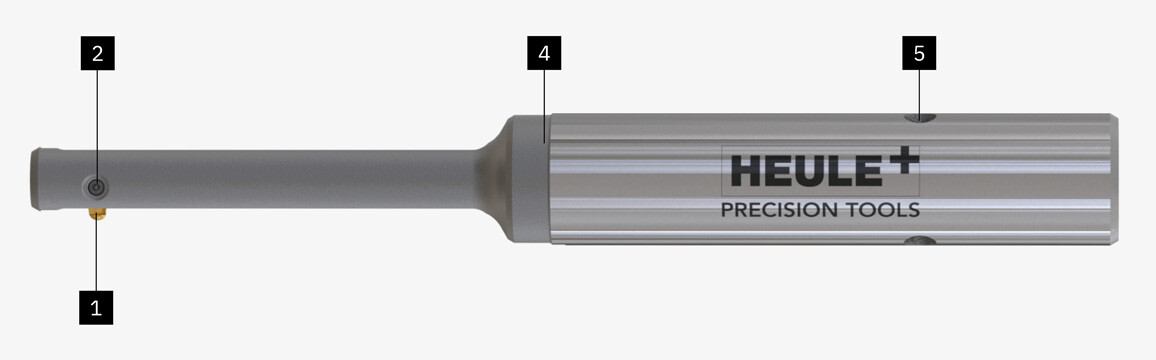
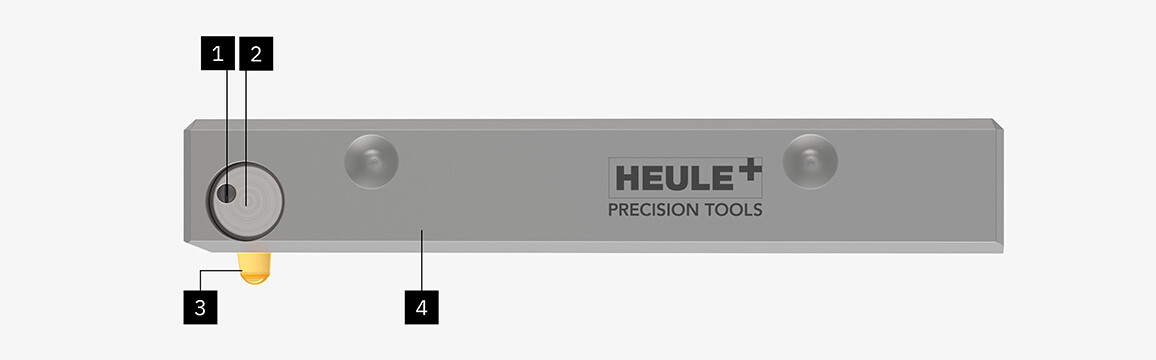
COFA c2 Deburring tools for front and back deburring in one pass
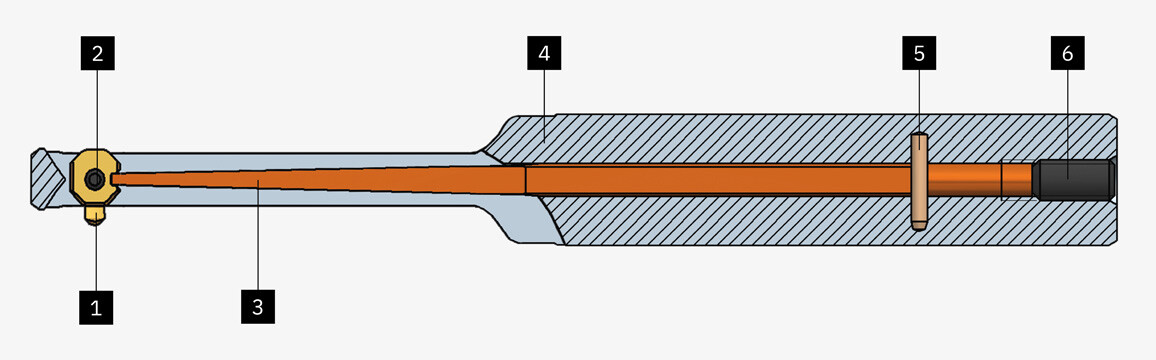
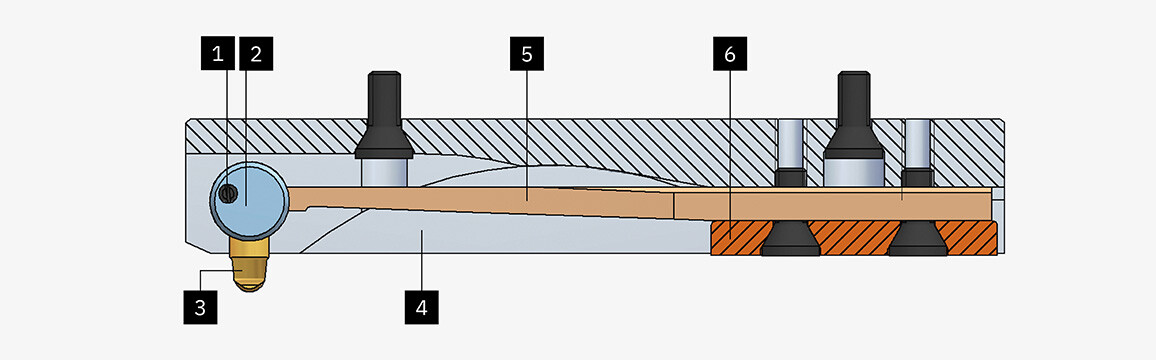
COFA C2 deburrs bore edges in a single pass - sectional view
Tool Concept
  1. Blade
  2. Roll pin
  3. Bending spring
  4. Tool body
  5. Cylinder pin
  6. Threaded pin
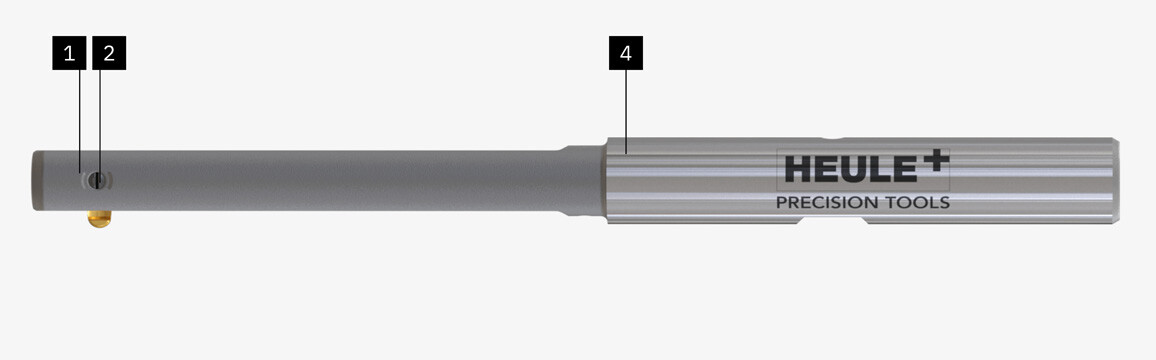
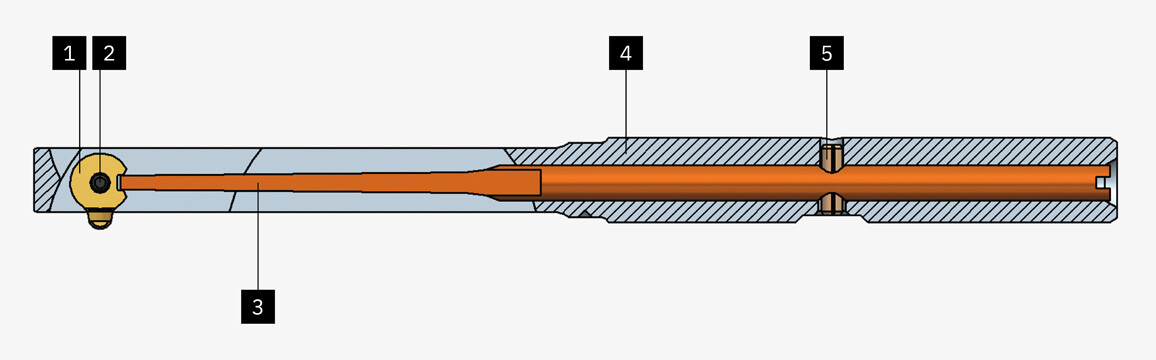
COFA 5m Tool with guide pins and cutting elements for automatic deburring in a single pass
COFA m5 Tool for deburring the front and rear edges of a bore in a single pass
Tool Concept
  1. Blade
  2. Split pin
  3. Bending spring
  4. Tool body
  5. Roll pin
COFA c8 Deburring tools for automatic deburring of bore edges in a single pass
COFA c8 Tool deburrs the front and rear edges of a crossbores in a Workpiece
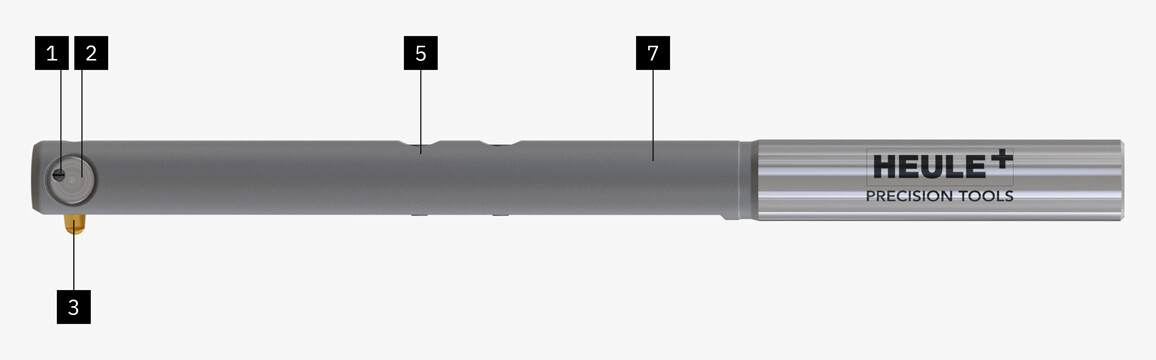
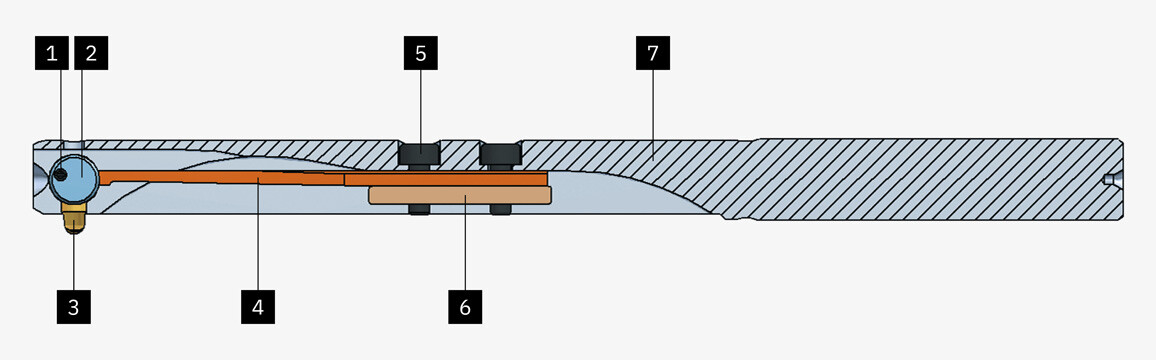
Tool Concept
  1. Split pin
  2. Blade holder
  3. Blade
  4. Bending spring
  5. Cylinder screw
  6. Terminal strip
  7. Tool body
COFA C6 Kassette_Rendering
COFA C6 cassette deburrs the front and rear edges of a bore in a single pass
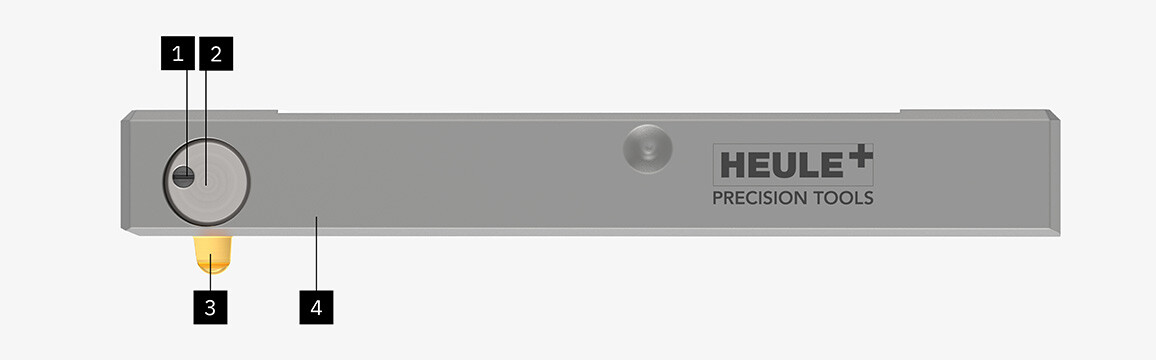
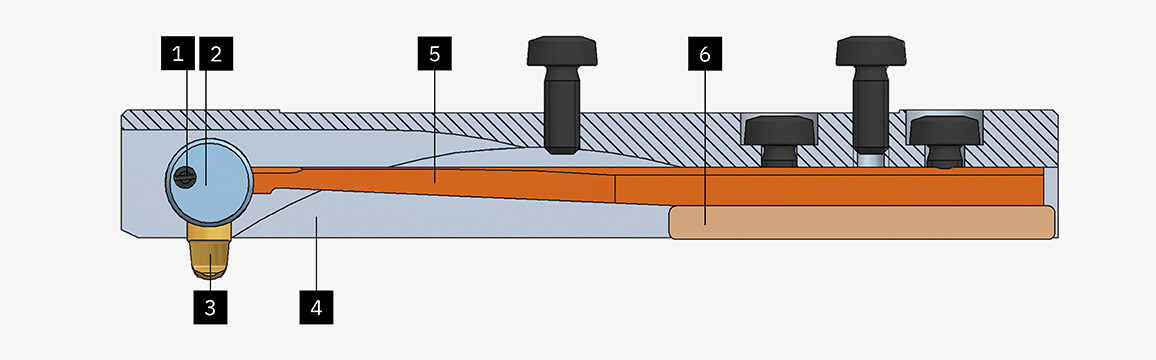
Tool Concept
  1. Split pin
  2. Blade holder
  3. Blade
  4. Tool body
  5. Bending spring
  6. Terminal strip
COFA C12 Kassette_Rendering
COFA C12 Kassette_Schnitt
Tool Concept
  1. Split pin
  2. Blade holder
  3. Blade
  4. Tool body
  5. Bending spring
  6. Terminal strip
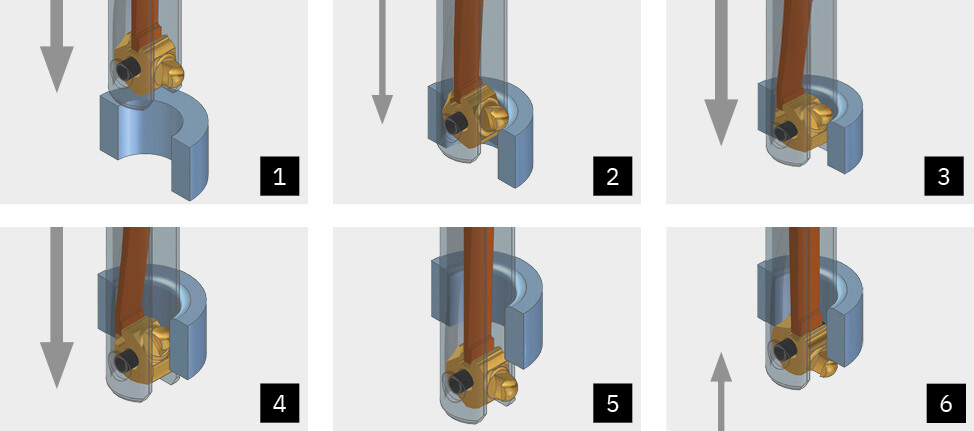
COFA system deburrs the front and rear edges of a bore in one stroke

Process steps description

Deburring with COFA is very straightforward. The burr on the front bore edge of the workpiece is removed during forward working feed at working speed. The blade then pivots into the tool body as it enters the bore. The result is a bore edge that has a radius profile and is uniformly deburred.


The tool then moves through the bore in rapid feed without stopping the spindle. The process does not damage the bore’s interior surface. In backwards working feed, the back edge of the bore is then deburred. Once the back deburring is complete, the tool can be removed from the bore in rapid feed.


The blade, which can rotate in the tool body, is spring-loaded. As a result, the cutting edge also follows uneven bore edges. This is required, for example, when deburring bores in a pipe. The deburring result is always the same, even if the height of the machining plane changes due to tolerances (e.g. cast parts).

Downloads

Are you interested in learning more about the COFA technology? You can find additional information in our download centre.

online-seminar-deburring-both-sides

How do I deburr a bore on both sides of the workpiece?

You can find out in our 20-minute Online Seminar "DEBURRING forwards & backwards in a single pass". 

Application Examples

Deburring tool in operation

COFA deburrs an uneven drilling edge in one pass - sectional view
lagerhuelse_titel_klein_rand
COFA Tool for automated deburring of bore edges in a single pass
1 / 3
Bearing bushing | The machining cycle time could be optimised, resulting in an improvement of at least 20%.
COFA deburrs the front and rear edges of a cylindrical bore in a single pass
Webseite_Vorschau_Anwendungen_nur Bild24
COFA Tool for automated deburring of bore edges in a single pass
1 / 3
Knee Replacement | The specified service life of 20 workpieces per blade could be significantly exceeded to over 60 workpieces.
COFA deburrs the front and rear edges of a cylindrical bore in a single pass
c1611134_korr
COFA Tool for automated deburring of bore edges in a single pass
1 / 3
Fork piece | Time saving due to process-reliable deburring and the elimination of manual rework on the fork
Contact

Would you like to discuss your deburring requirements?

We are pleased to assist.

Thanks to our worldwide network of branch offices and approximately 50 sales partners in 35 countries, HEULE competence and know-how is always within quick and easy reach.

Find your point of contact
HEULE Beratung